
We've done the analysis, we've dug through the information, and we've put together this guide to help you make the right decision. Whether you're a homeowner, a business owner, or a community leader, this guide will help you understand the importance of earthquake preparedness and how to take steps to protect yourself and your loved ones.
| Key Difference | Earthquake Drills | Earthquake Simulations |
|---|---|---|
| Purpose | Practice earthquake response procedures | Test earthquake response plans and procedures |
| Scale | Small-scale, typically involving a single building or group of buildings | Large-scale, involving multiple buildings, communities, or regions |
| Participants | Building occupants, employees, or community members | Emergency responders, government agencies, and community organizations |
| Frequency | Regularly scheduled, e.g., annually or semi-annually | Periodically conducted, e.g., every 3-5 years |
- Why are earthquake drills and simulations important?
- How to organize an earthquake drill
- How to participate in an earthquake drill
- How to use earthquake drills to improve your community's preparedness
- Conclusion: Seismic safety preparedness is essential for protecting your community from the devastating effects of an earthquake.
FAQ
This comprehensive guide to earthquake drills and simulations aims to provide essential information and address common concerns, empowering individuals and communities to enhance their seismic safety preparedness.
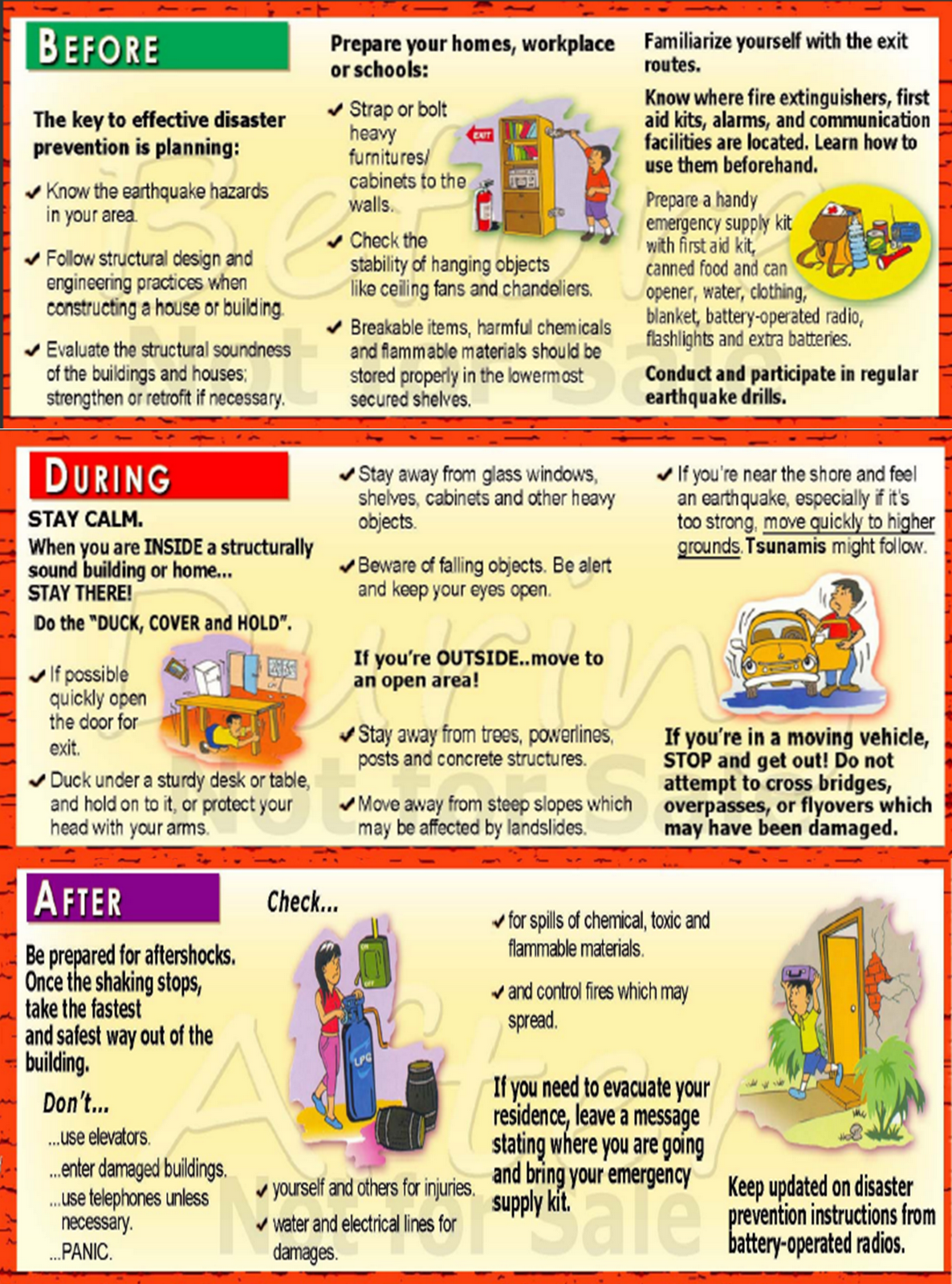
Earthquake Preparedness Guide | I-Cagayano - Source icagayano.blogspot.com
Question 1: Why are earthquake drills and simulations crucial for disaster preparedness?
Earthquake drills and simulations play an indispensable role in disaster preparedness by fostering familiarity with safety procedures, promoting rapid response, and enhancing situational awareness. They enable participants to practice essential actions, such as "Drop, Cover, and Hold On," as well as evacuate buildings and open spaces efficiently. By simulating real-life earthquake scenarios, drills and simulations help individuals develop confidence and muscle memory to respond effectively in the face of an actual event.
Question 2: How often should earthquake drills be conducted?
To maintain proficiency and ensure preparedness, it is recommended that earthquake drills be conducted regularly, ideally every three to six months. This frequency allows for memory reinforcement, skill refinement, and the identification of areas for improvement. Schools, workplaces, and communities should establish a consistent drill schedule and ensure that all participants are aware of the plan and procedures.
Question 3: What are the key steps involved in an effective earthquake drill?
Effective earthquake drills typically involve the following steps:
- Announcing the start of the drill.
- Instructing participants to "Drop, Cover, and Hold On" under tables or other sturdy structures.
- Simulating aftershocks and having participants remain in their protective positions.
- Calling for evacuation when it is safe to do so.
- Debriefing and evaluating the drill to identify areas for improvement.
Question 4: How can earthquake drills be tailored to specific needs and circumstances?
To ensure the effectiveness of earthquake drills, they should be tailored to the specific needs and circumstances of the participants. Consider factors such as building layout, potential hazards, and the mobility of individuals. For instance, drills in schools may focus on practicing evacuation procedures, while drills in workplaces may prioritize safety procedures for specific types of equipment.
Question 5: What are the benefits of participating in community-wide earthquake simulations?
Community-wide earthquake simulations provide an opportunity for large-scale coordination and response testing. They involve multiple organizations, agencies, and individuals working together to simulate a major earthquake and its aftermath. Simulations enable the evaluation of emergency plans, communication systems, and resource allocation, while fostering collaboration and interagency cooperation.
Question 6: How can technology enhance earthquake drill and simulation effectiveness?
Technology can enhance the effectiveness of earthquake drills and simulations by providing tools for scenario creation, data collection, and real-time monitoring. Mobile applications can guide participants through drills, simulate ground shaking, and facilitate post-drill feedback. Social media platforms can be utilized for rapid dissemination of information and coordination.
In summary, earthquake drills and simulations play a critical role in enhancing seismic safety preparedness. By fostering familiarity with safety procedures, promoting rapid response, and enhancing situational awareness, these exercises empower individuals and communities to mitigate the risks associated with earthquakes. Regular drills, tailored to specific needs, are essential for maintaining proficiency and ensuring effective response in the event of an actual earthquake.
Transitioning to the next article section: This guide provides a comprehensive overview of earthquake drills and simulations. For further information on specific preparedness measures, evacuation plans, and community resilience, please refer to the subsequent sections of this resource.
Tips
For more comprehensive information, refer to Seismic Safety Preparedness: Comprehensive Guide To Earthquake Drills And Simulations. It provides in-depth guidance on conducting earthquake drills and simulations effectively.
Tip 1: Involve all personnel
Ensure that everyone in the building or organization participates in the drill. This includes employees, visitors, and contractors. Participation can increase awareness, improve coordination, and reduce panic during a real earthquake.
Tip 2: Practice different scenarios
Do not limit drills to a single scenario. Vary the magnitude, location, and timing of the simulated earthquake to test participants' responses under various conditions. This will help them develop a broader understanding of how to react.
Tip 3: Use realistic simulations
Employ realistic simulations to create a sense of urgency and immersion. Use shaking tables or virtual reality to provide a physical or visual representation of an earthquake. This can help participants experience the effects of an earthquake firsthand.
Tip 4: Debrief after each drill
Following each drill, conduct a debriefing to evaluate performance, identify areas for improvement, and reinforce key messages. Discuss what went well, what could have been done better, and any lessons learned. This will help refine the drill procedures and enhance participant preparedness.
Tip 5: Conduct drills regularly
Regular drills are essential for maintaining proficiency and ensuring that participants retain the knowledge and skills necessary for earthquake preparedness. Establish a regular schedule for drills and stick to it as much as possible.
Effective earthquake drills and simulations are crucial for enhancing preparedness and mitigating the impact of earthquakes. By incorporating these tips into your drills, you can improve the safety and well-being of individuals in your building or organization.
Seismic Safety Preparedness: Comprehensive Guide To Earthquake Drills And Simulations
A comprehensive preparedness plan is crucial for effective response to earthquake hazards. Seismic safety drills and simulations play a pivotal role in enhancing community resilience by providing hands-on training and testing emergency response procedures.
Workplace Earthquake Preparedness Guide | Gurmu OccMed Svs. - Source www.gurmuoccmed.com
- Plan and Practice: Establish clear evacuation plans, practice drills regularly, and identify safe zones.
- Community Engagement: Involve all community members in drills and simulations to foster collective understanding and response.
- Simulation Realism: Use realistic scenarios and equipment to simulate the actual conditions during an earthquake.
- Interagency Coordination: Facilitate collaboration between emergency responders, community organizations, and government agencies.
- Evaluation and Improvement: Regular evaluation of drills and simulations helps identify areas for improvement and enhance overall preparedness.
- Technology Integration: Leverage technology such as early warning systems, mobile apps, and social media for rapid communication and guidance.
By implementing these key aspects, communities can significantly enhance their seismic safety preparedness. For instance, realistic simulations can educate participants on the importance of "Drop, Cover, and Hold On" during an earthquake. Interagency coordination ensures seamless collaboration among first responders, mitigating communication breakdowns during critical moments. Regular evaluation empowers communities to continuously refine their response plans, resulting in a more resilient and prepared citizenry.
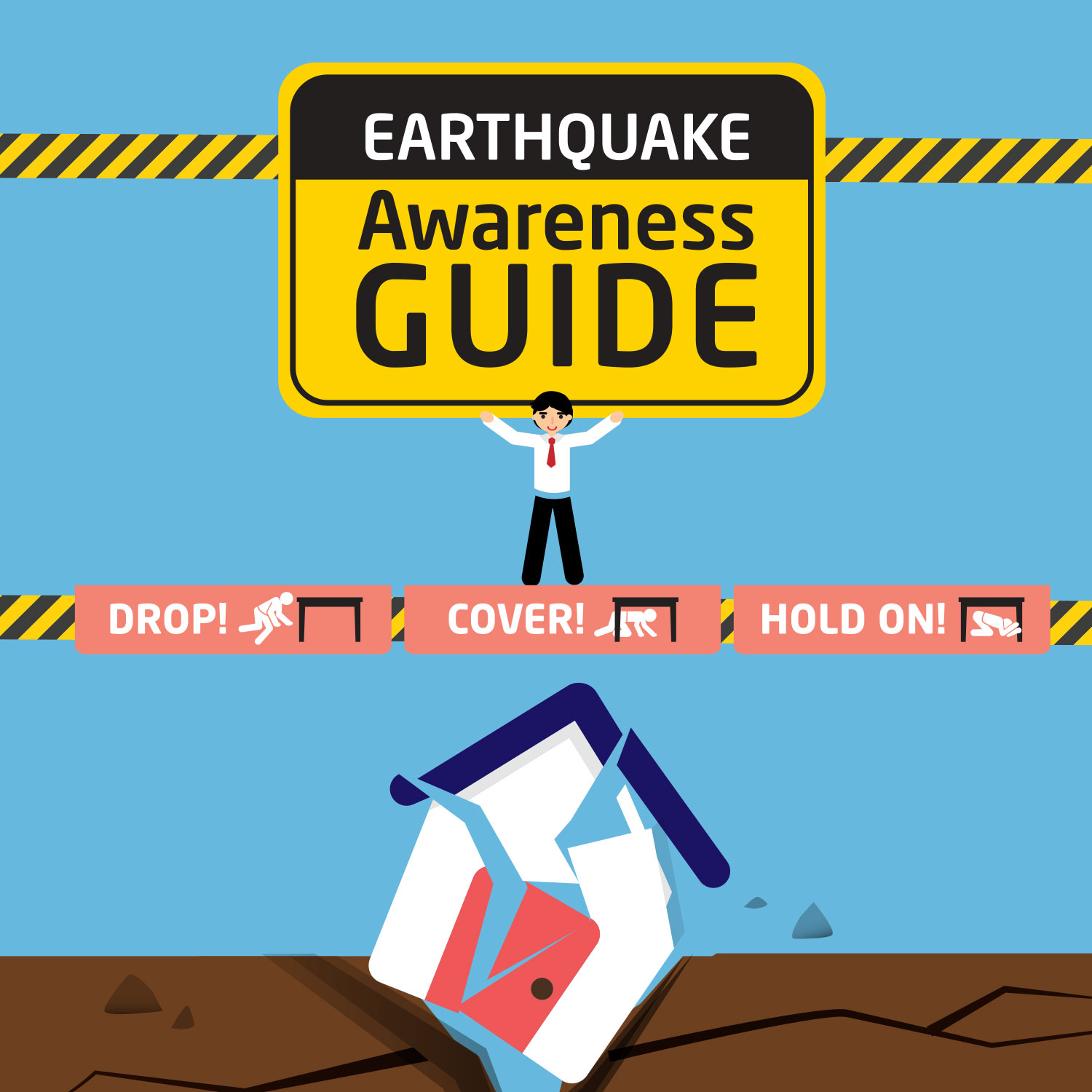
MSIG Earthquake Awareness Guide – hnhoyle - Source hnhoyle.com.my
Seismic Safety Preparedness: Comprehensive Guide To Earthquake Drills And Simulations
This comprehensive guide explores the significance of earthquake drills and simulations as integral components of seismic safety preparedness. By understanding the potential effects of earthquakes and implementing proactive measures, individuals and communities can minimize risks and enhance their resilience in the face of seismic events.
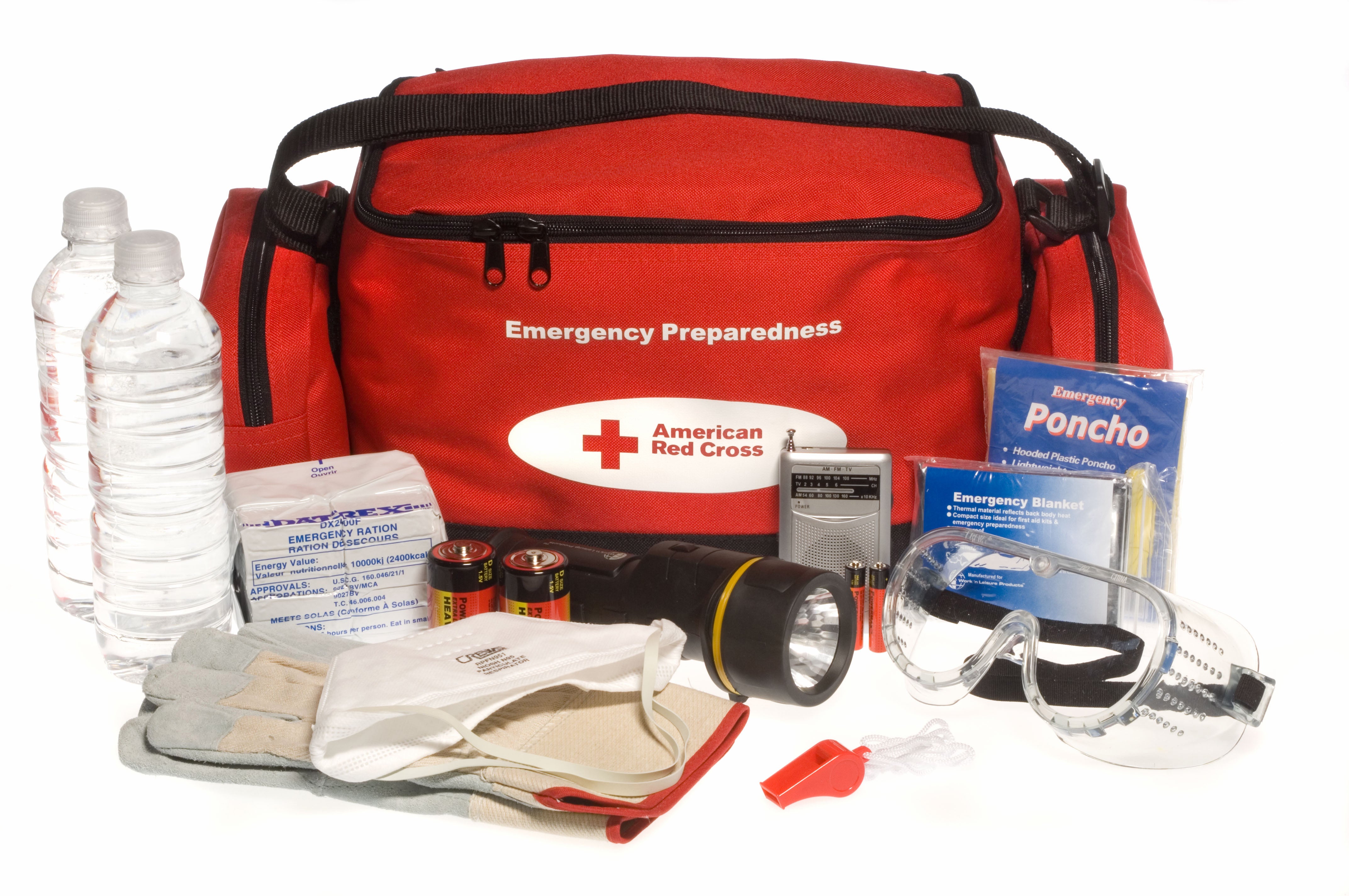
Earthquake Preparedness | Department of Building Inspection - Source sfdbi.org
Effective earthquake drills and simulations provide a structured and realistic environment for individuals to practice emergency procedures, identify hazards, and develop appropriate responses. These exercises help strengthen communication channels, foster coordination among emergency response teams, and improve overall preparedness levels. Real-life examples, such as the Great ShakeOut Earthquake Drills conducted globally, demonstrate the practical significance of drills and simulations in promoting public safety and reducing earthquake-related injuries.
Understanding the connection between preparedness drills and simulations contributes to a more informed and proactive approach to seismic safety. By integrating these exercises into comprehensive preparedness plans, communities can create a culture of earthquake awareness and empower individuals to take responsibility for their own safety and the well-being of others.
In conclusion, the "Seismic Safety Preparedness: Comprehensive Guide To Earthquake Drills And Simulations" serves as an essential resource for understanding the vital role of drills and simulations in earthquake preparedness. By fostering a culture of preparedness, communities can mitigate the effects of seismic events and enhance the resilience of society.
Table: Importance of Earthquake Drills and Simulations
| Benefit | Impact |
|---|---|
| Practice emergency procedures | Improves response time and effectiveness |
| Identify hazards | Enhances situational awareness and risk assessment |
| Develop appropriate responses | Reduces panic and promotes safe actions during an earthquake |
| Strengthen communication channels | Ensures effective coordination and information sharing |
| Build community resilience | Empowers individuals and fosters a collective approach to disaster preparedness |
Conclusion
Seismic safety preparedness requires a multi-faceted approach, with earthquake drills and simulations playing a crucial role in enhancing individual and community resilience. By investing in these exercises, we create a society that is informed, prepared, and better equipped to face the challenges of seismic events.
The future of seismic safety lies in continuous improvement, technological advancements, and a commitment to public education and outreach. By working together, we can build a world where communities are empowered to withstand earthquakes and mitigate their devastating effects.